Rae Rose
disability, creativity
recent posts
about
-
I was 26 and had been taking medication for bipolar disorder since I was 18 when I had the brilliant idea that I didn’t need it anymore.
I decreased, with my “doctor’s” recommendation and the support of my friends in Portland, all of my meds until I was only on a low dose of one. I can’t remember what horrible thing happened first. I just know that in the next month all of things happened (in no particular order):
I walked out of my writing class to walk across the street to get a shot of vodka to try and tame my mania. I ran across a highway in the middle of the night in heels and sprained my ankle. I trashed my room while sobbing and praying. I couldn’t sleep so I kept making and eating cheese quesadillas throughout the night to try and pass out. I searched a grocery store for vodka for hours, not remembering or having the ability to remember that in Oregon you can only by alcohol at liquor stores. I wore bright red lipstick, an itty-bitty dress and talked to a stranger on his porch until the sun came up.
As odd as this sounds, it’s pretty common. Luckily, this is the only time it happened and this is why:
- I did not have educated support of the people I lived with and surrounded myself with. I was not living with my family, I was living with a friend in Portland. This friend is an amazing person, but she doesn’t really believe in modern medicine. She kept talking about how I needed more yoga, how I could replace my seroquel with herbs and how chanting and acupuncture could sort me out. After awhile I started wondering if she had a point – I mean, she was doing great and she was doing it all naturally with herbs! Maybe I had rushed into the whole western medicine gig.
- My psychiatrist was not a psychiatrist. I was on disability in Portland and the person they set me up with for my psych meds was actually a nurse practitioner. I didn’t think about this too hard. What I did start thinking about was the way he was telling me to change my diet to eat cleaner. He told me exercise and diet could treat my bipolar disorder, and I started to believe him.
- I was doing really well. I had new friends, I was volunteering and I got into Marge Piercy’s first Writer’s Intensive Workshop in Wellfleet. If I was doing so well, how did I KNOW that I couldn’t do even better without all the side effects of my medication?
I knew I had gone completely crazy when I thought that if I wrote a line of poetry down it would cause chemical warfare in the streets. I called my nurse practitioner – he recommended that I eat coconut oil for the mania. I called a friend back in my hometown. “COCONUT OIL?” He yelled. “I’m calling your dad!” Soon my family and friends back home had ordered me a taxi to take me from my apartment to the airport. They bought me a plane ticket. (I know I am very blessed to have had these resources.) They picked me up and drove me to the psychiatrist I had seen when I was first diagnosed. He did not scold me – no one did – because he knew how bad I felt. He didn’t have to tell me to never ever do this again. I had hit a rock bottom. I had needed Southern California to band together to get me out of Portland, Oregon. My ankle was sprained and my confidence was bruised. I knew I would never get off of my meds – that I would never believe myself to be “better.”
I’m “better” because I’m on them – and I always take time to listen to my friends who are taking meds, making sure that they remember that, too.
-
::I’m happy to publish this guest post by the beautiful and talented Natasha Lipman::
A few weeks ago, I was sitting down in the shower whilst on holiday in Germany, singing along to Disney songs, when “Let It Go” from Frozen came on and I found myself bursting into tears as I sang/shrieked “I’m never going past, the past is in the past!”.
It was a somewhat weird sensation, and as I wrapped myself in a towel, I scolded myself for being so silly. And while I did feel very silly indeed for crying at a Disney song, it illustrated to me just how far I’ve come in how I view my relationship to myself, others, and chronic illness.
I’ve lived with chronic illness since I was 9, but I could hide it until my early 20’s, when it somewhat (read: massively) took over my life. It took a long time to see how it all started to chip away at my confidence, self-esteem and way I viewed myself. When every single step you take and thing you do is dictated by your health, it’s hard to separate yourself out and feel as though you have an identity outside of it.
I spent most of my time in bed, living in dark box, dependent on other people for company, entertainment, and support in everything from going to hospital appointments, preparing food, and even getting dressed.
I couldn’t keep a job, and the way I viewed ‘social time’ completely changed. Everything was obsessively planned and rationed so make the most of the few minutes a day I felt somewhat myself. But I didn’t feel like the ‘old Natasha’. New Natasha was (so I thought) boring, sad, and lonely. My confidence in my capabilities was shot, and I didn’t really know what I was when I couldn’t offer anything short of my occasional company and a whole lot of internet sarcasm.
All of this added up to a level of insecurity that makes me sad to think about. I felt like I was a total burden – undeserving of a job (how could I find one that worked for me, anyway?) and a relationship. After all, who would want someone that needs looking after in their twenties as much as I do that spent most of their time in bed. Not exactly the kinda person one goes looking for on Tinder, amiright? (But y’all should – we’re awesome!).
All of those feelings ate away at me for a long time, and I kinda come to terms with the fact that I was going to be freelancing when I could and alone for the rest of my life. So when I was offered my dream job and I found the most amazing, loving, and supporting partner – I was terrified.
I’d spent so many years questioning why anyone would want to be with me for anything other than friendship – it was so hard to accept that I had these wonderful things in my life. I was scared that a blip in my health (which happens pretty frequently) would be too much and it’d all come crashing down and I’d be left alone in my dark box once again.
So, it has been a process. I truly wish I had some kind of magical advice that would change the way those of us with chronic illness view our worth – but I don’t have any. I found that it had to come from external validation that I was deserving and enough, just the way I am. And whilst that goes against conventional ‘be kind to yourself’ Insta-wisdom – I found that until I was told this by people I loved and/or respected enough times, I just couldn’t believe them (I won’t get into the whole societal stuff around productivity=worth thing screwing with my mind – but that played a hugeeeeee role in all of this!)
Even now, my insecurities come into play – especially when I’m bed bound by a flare, going out is so difficult, I struggle to work, or I can’t contribute to the day-to-day ‘house’ stuff – both physically and financially. I question why I’m worth the hassle – and it sucks to feel so down on myself for something I have no control over.
But that’s exactly the point. I do everything I can to be in the best shape my health will let me be in – and no matter what, I know that it’s not my fault. And I have a personality, skills, and talents which are, of course, impacts by my health, but not complete overruled by it.
Spending time both on social media and off of it has completely changed my perspective. Online, reading and communicating with people who are managing to find ways to work and live and love that work for them and their bodies has made me realise that there are people out there who see beyond health – even if we can’t always. And offline, realising that I have so much to offer – even if it’s not the way I thought I’d be living my life has been completely game-changing.
One of the most important things I’ve learned is that everything about me isn’t ‘in spite of’ my illnesses. I live with my illnesses and they are part of me. I can’t ignore that – they’ve shaped me more than anything else in my life has. And that’s ok. Because I rock it.
There are always going to be people who don’t get it. I choose not to spend my time with them.
It’s only when I take a minute to reflect on everything I’ve achieved (and for chronic illness those achievements can range from the big work stuff to the tiny ‘got out of bed and brushed my teeth), I realise that I am truly happy for the first time in my life.
I never know how I’m going to feel from one day to the next, but I’m hoping that I have let go some of that insecurity, and realised my self-worth is based on more than my output. I work so hard every day and try to be there for the people in my life that I love (and people on the internet who ask for my help) and generally consider myself a good person with a lot to offer. So why don’t I deserve the same in return?
Turns out, I do.
 Natasha Lipman is a chronic illness blogger from London. She is a journalist focussing on disability and women’s health at BBC Stories. You can find her on Instagram and Twitter @natashalipman and on her blog at www.natashalipman.com
 -
Here are a group of kids telling me all about this robot during a poetry workshop in San Diego. (You can get an ebook of the class for free right here.)
-
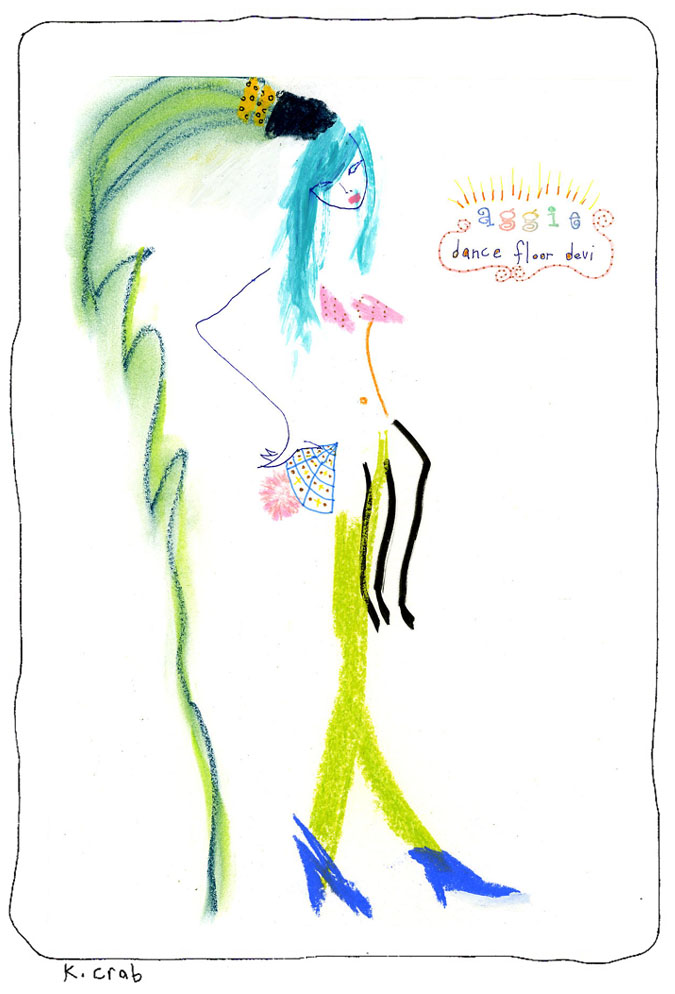 “Aggie Dance Floor Devi” by Kathy Crabbe
Boas. Fake lashes. Heels. I even had a disco ball that spun from my ceiling. Loud, gorgeous clothes.
What I didn’t have was a future in the world of drag because I was already a girl, and I didn’t want to dress like a man. I wanted to dress like a Queen.
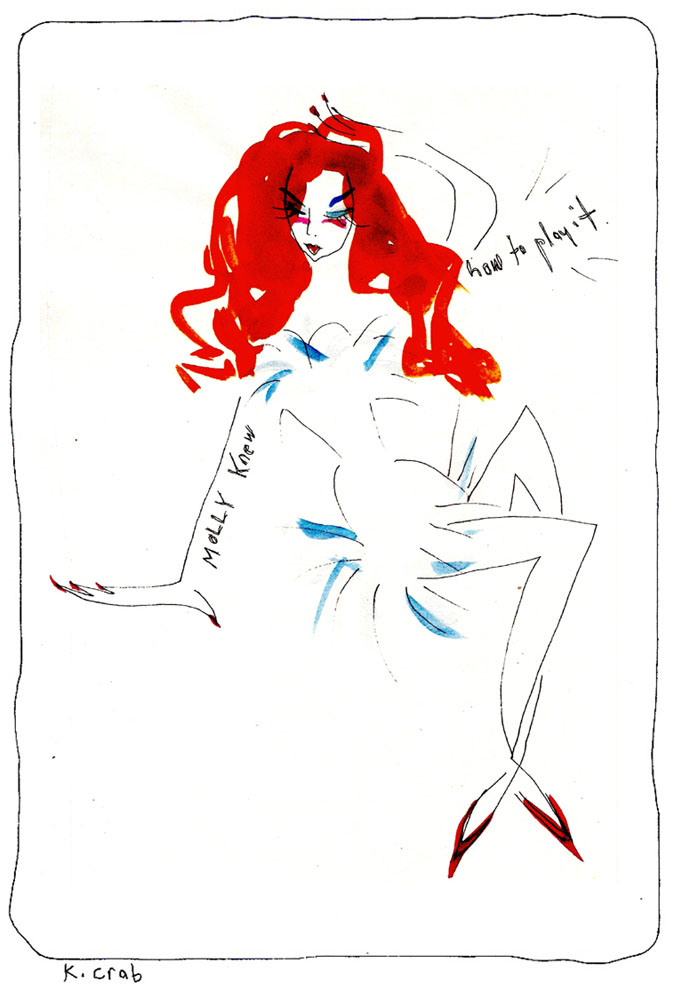
“Molly Knew How To Play It”‘ by Kathy Crabbe
My brother, who is 15 years older than me, took me to Pride in San Francisco and I fell for those gorgeous ladies. I loved their attitudes and the way they moved. They did not apologize constantly the way women in my family did. They loved themselves.
I knew it could never be my reality, but that didn’t mean I didn’t practice with my boombox in the privacy of my room in my little hometown in Rainbow, CA. (Yep.)
When I got pregnant (25 years later) the first books for children I looked for were books about drag queens (I couldn’t find one — any suggestions?) and to see if they had Drag Queen Story Hour at the library in my city. They don’t.
I watched hours and hours of RuPaul’s Drag Race while on bed rest while pregnant… little did I know I was about to start my routine again.
Elro, my daughter, is fussy. Do I stress about it? Nope. Apologize for it? Nah. I want her to love herself. She digs music. When she’s so fussy she looks like Danny DeVito, I turn into the drag queen I have always been in my heart and lip sync the hell out of some Whitney Houston, Ida Maria, Megan Trainer…. everyone.
She loves it.
Once she had a total meltdown and I had to summon the power of Beyoncé. I was thankful for the gay bars I frequented during her “Single Ladies” debut. After the number was over, when Elro was smiling even though her face was still wet with tears, I felt powerful. I felt awesome — and I realized that that feeling was an important feeling to hang on to and cultivate. Because, as RuPaul asks again and again — if you can’t love yourself, how the hell you gonna love somebody else? And my little girl deserves lots and lots of love.
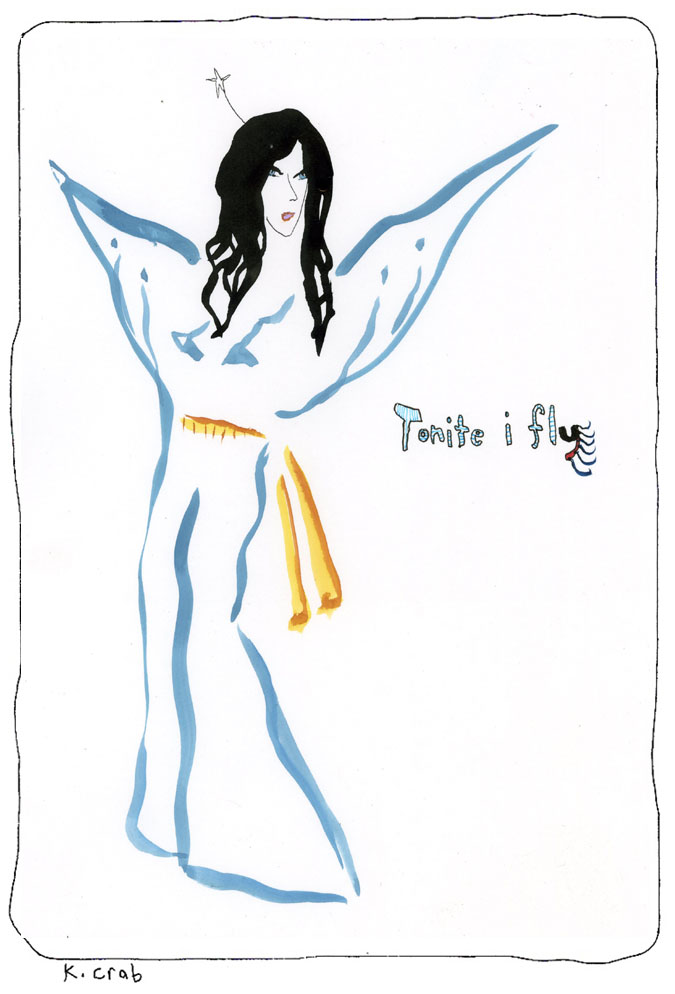
“Tonite I Fly” by Kathy Crabbe
About the artist!
Kathy Crabbe is a Canadian born, self taught artist intuitively inspired by a shamanic exploration of the inner psyche.
Kathy is an intuitive guide, creator of the Lefty Oracle deck and a teacher at the Wise Woman University. She is the founder of the Temecula Artist’s Circle and co-founder of the Temecula Arts Mixer and the Writer’s Cafe.
Kathy lives with her architect husband, Mark and their two mutts, Abby & Djinn Djinn in homes they’ve built themselves surrounded by the desert and forest wilderness of Temecula, California and the 1000 Islands, Canada.
Find her work at KathyCrabbe.com!
The first image used is entitled “Gloria Simply Adored Herself”
-
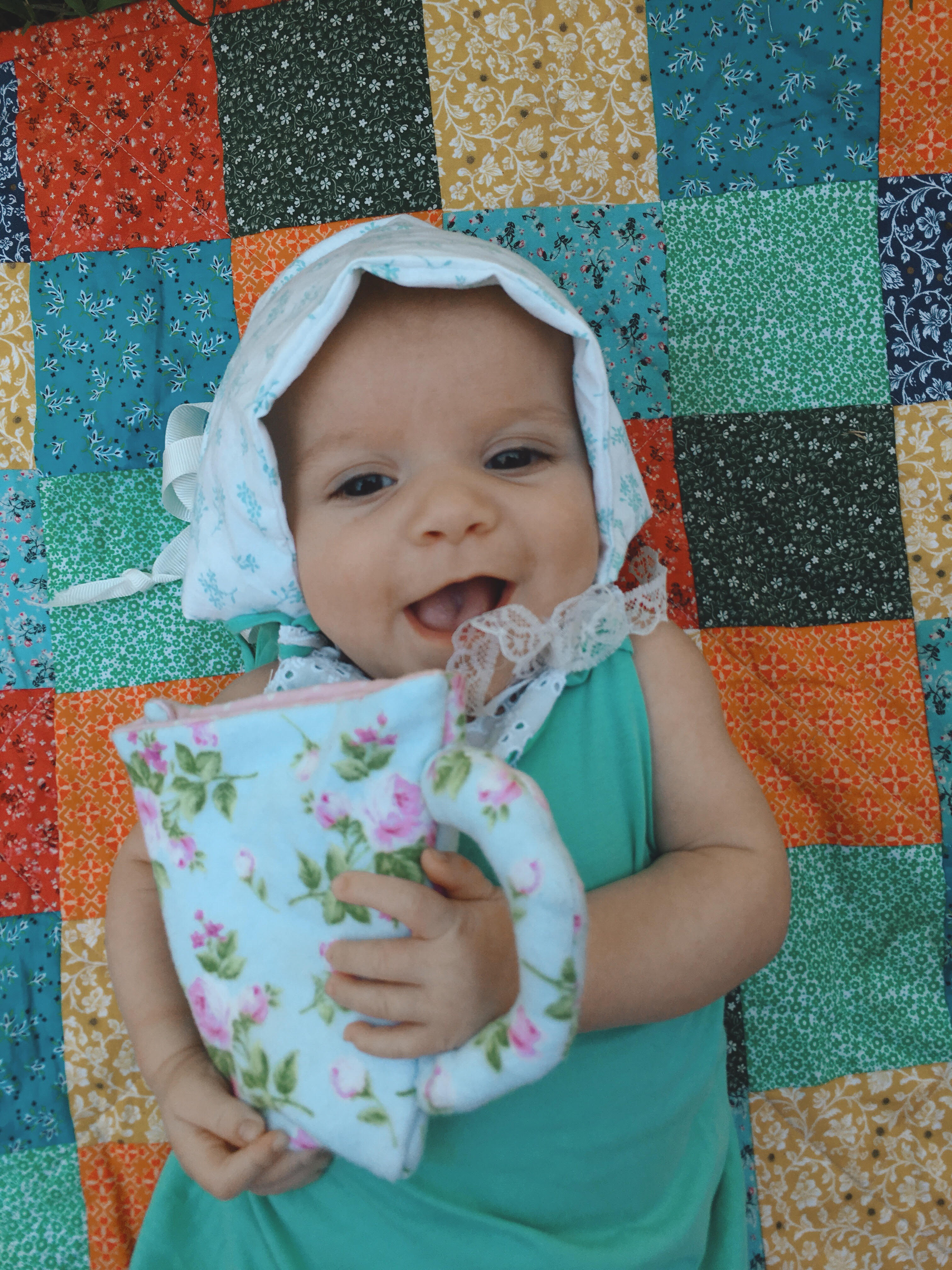
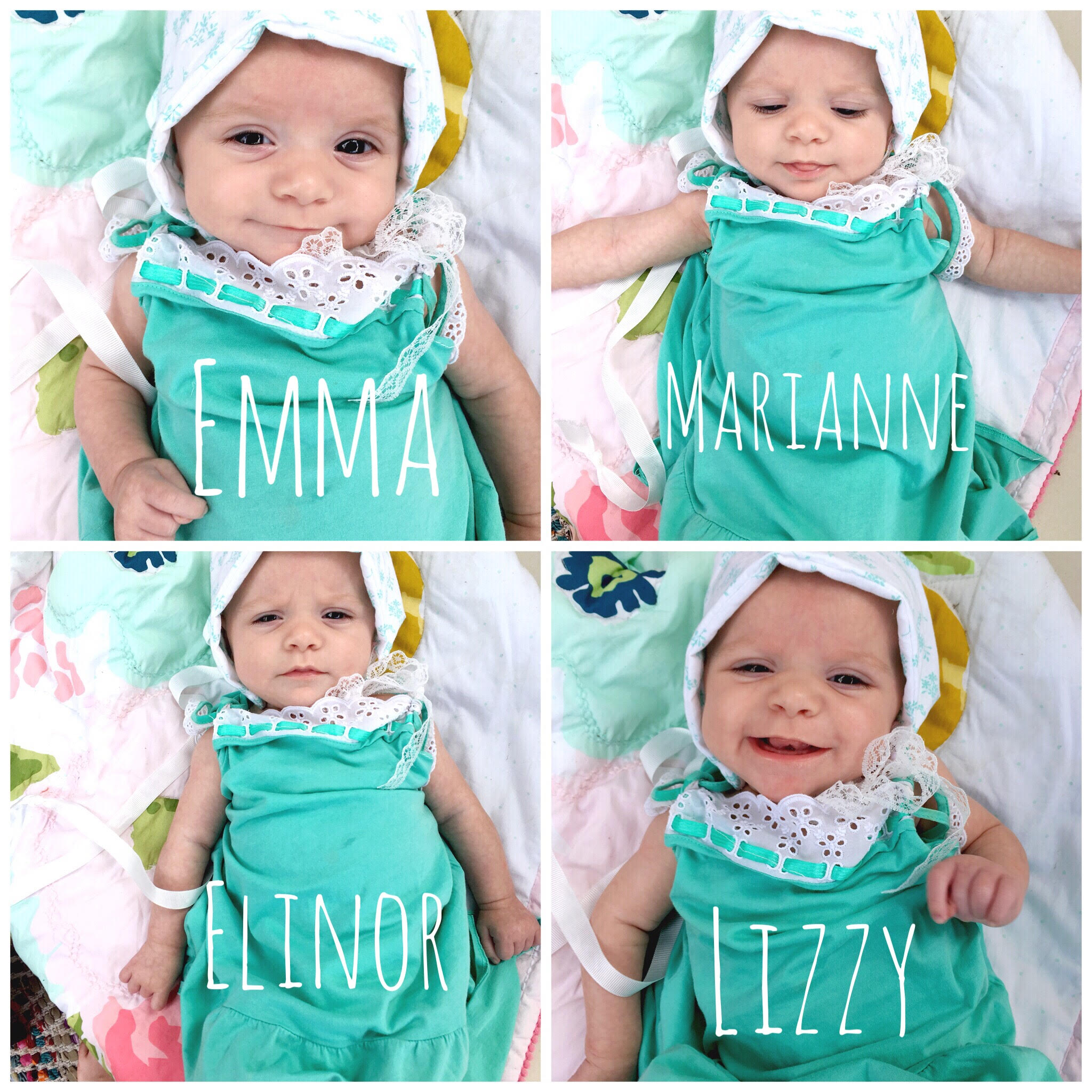 Today we had an ode to Jane Austen! (That’s why you have babies, right?) I made Elro a gown (no sleeves — it’s too hot for that!) and a bonnet and took some pictures, then matched them up to some of Austen’s heroes. I also made a fabric tea cup for sound exploration — DIY below.
I wanted to build a tea cup that rang like a bell. But then I wanted one that crinkled. Then I wanted one that rattled…
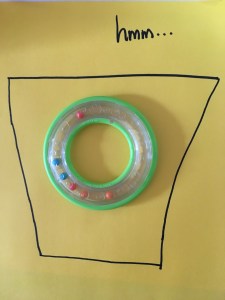
I finally decided to make more of a tea cup pocket with velcro so I can introduce Elro to any sound I wish!
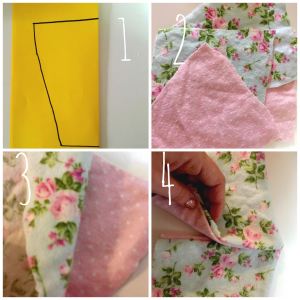
1. I drew the shape of the tea cup, then folded it in half so when I cut it out it was even on both sides. This became my pattern. 2. I cut out four pieces of fabric from my pattern. Two were the outside print of the tea cup — the roses — and two were the inside prints — pink polkadots — of the tea cup. 3. I placed one rose print side and pink polkadot side, right sides together. I stitched them together along all sides except the shortest side. That’s where I turned it inside out. 4. I did the same thing with the other two pieces of fabric. I then had two halves of my teacup.
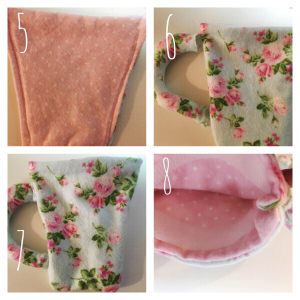
5. I put the two sides of the tea cup together with the outside print facing each other. I sewed on all sides except for the longest side, which is how I turned it inside out. 6. There are a million ways to make a handle, if you even want one. I’m not sure if my baby can hold onto it yet. I cut outside fabric — with right sides together) into a c sort of shape. I sewed it together, turned it inside out and stuffed it. 7. I hand stitched it on my cup. 8. Adding Velcro to the inside of the cup is the last step.
The end result? Capital!
-
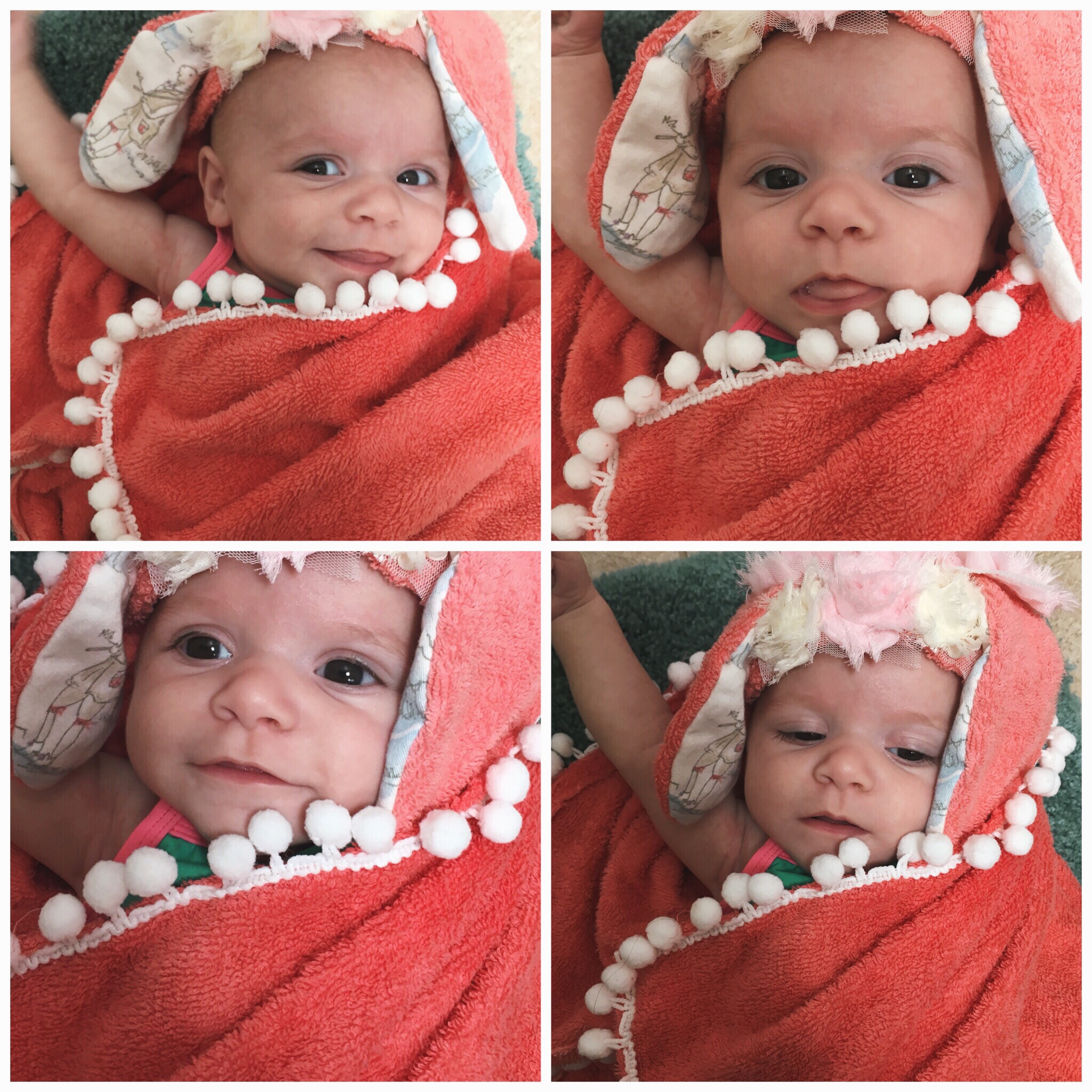 Using one of the many online tutorials for a hooded towel, I measured my bunny. I ended up using one of my towels and then cutting off part of it for the hood instead of using a hand towel as many of the online tutorials suggested. She’s so little! She only needs a bitty towel.
I drew the ears, then cut out a contrasting fabric, placed it face down on the towel and sewed almost all the way around it, leaving an area open so I could turn it inside out. I thought I wanted BIG floppy ears so stuffed them, but they looked way too ridiculous for her face.
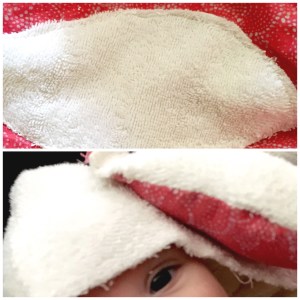 Yikes! I hated the size!
I also realized I didn’t love the color. Instead of buying a new towel I dyed this towel coral with Ritz dye. I thought about embroidering a nose and eyes on the towel, but realized it was more important to me to have some flowers right by her forehead. (It reminded me of Ester Williams, what can I say.) I used some left over flowers from the head-band station at my baby shower.
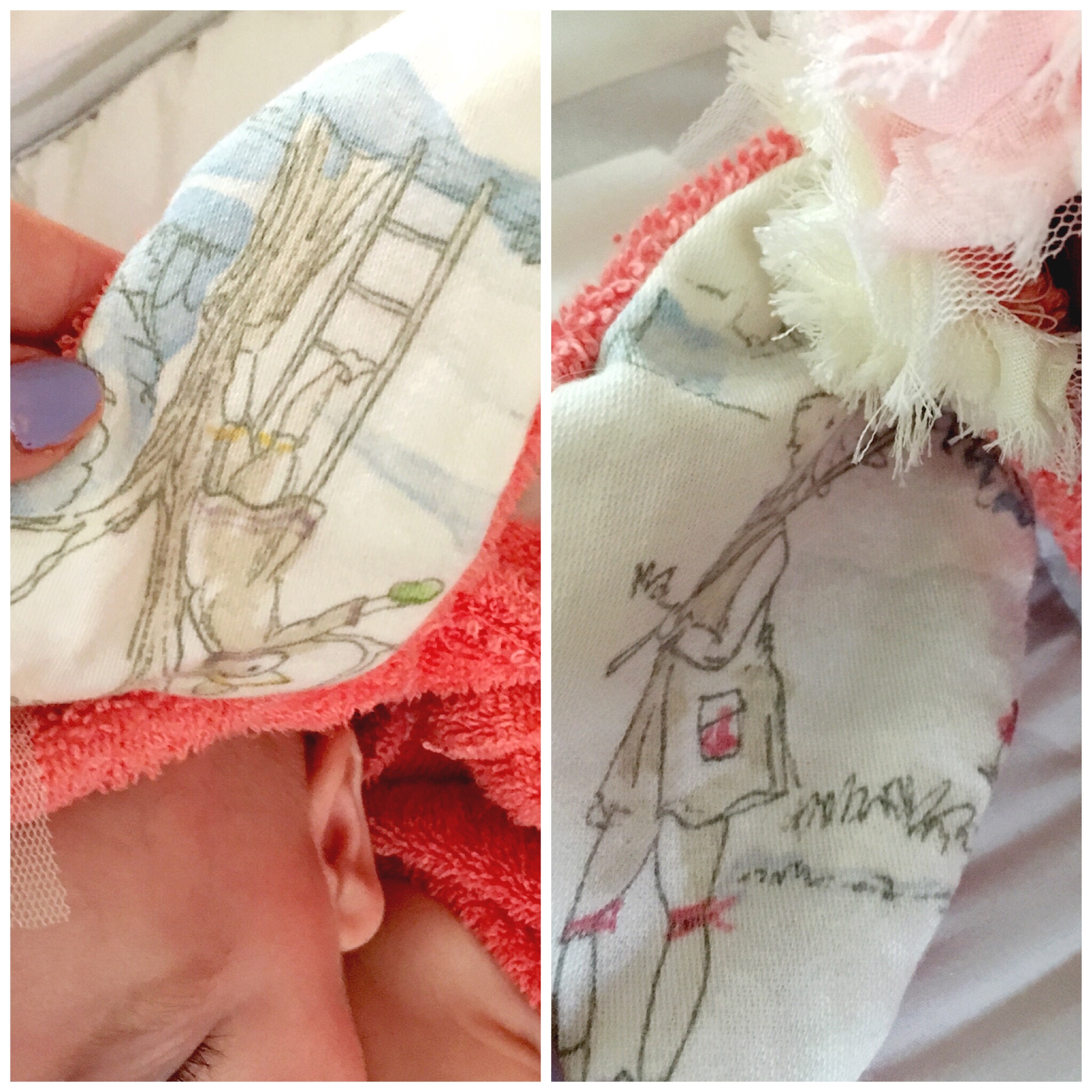
I shortened the ears and then used the same technique as I had before, this time using a contrasting fabric that looked a bit vintage and had bunnies wearing clothes. (I got this fabric, which was a sheet, for less than a dollar at a thrift store and have made a ton of stuff from it!)
 I made a white pompom tail, sewed pom pom trim around the neck and arms and made some coral tassels for the back so that at every angle you could see something a little boho and fun. She went swimming for the first time at her aunt Debbi’s pool and I was very happy with how her bitty towel turned out!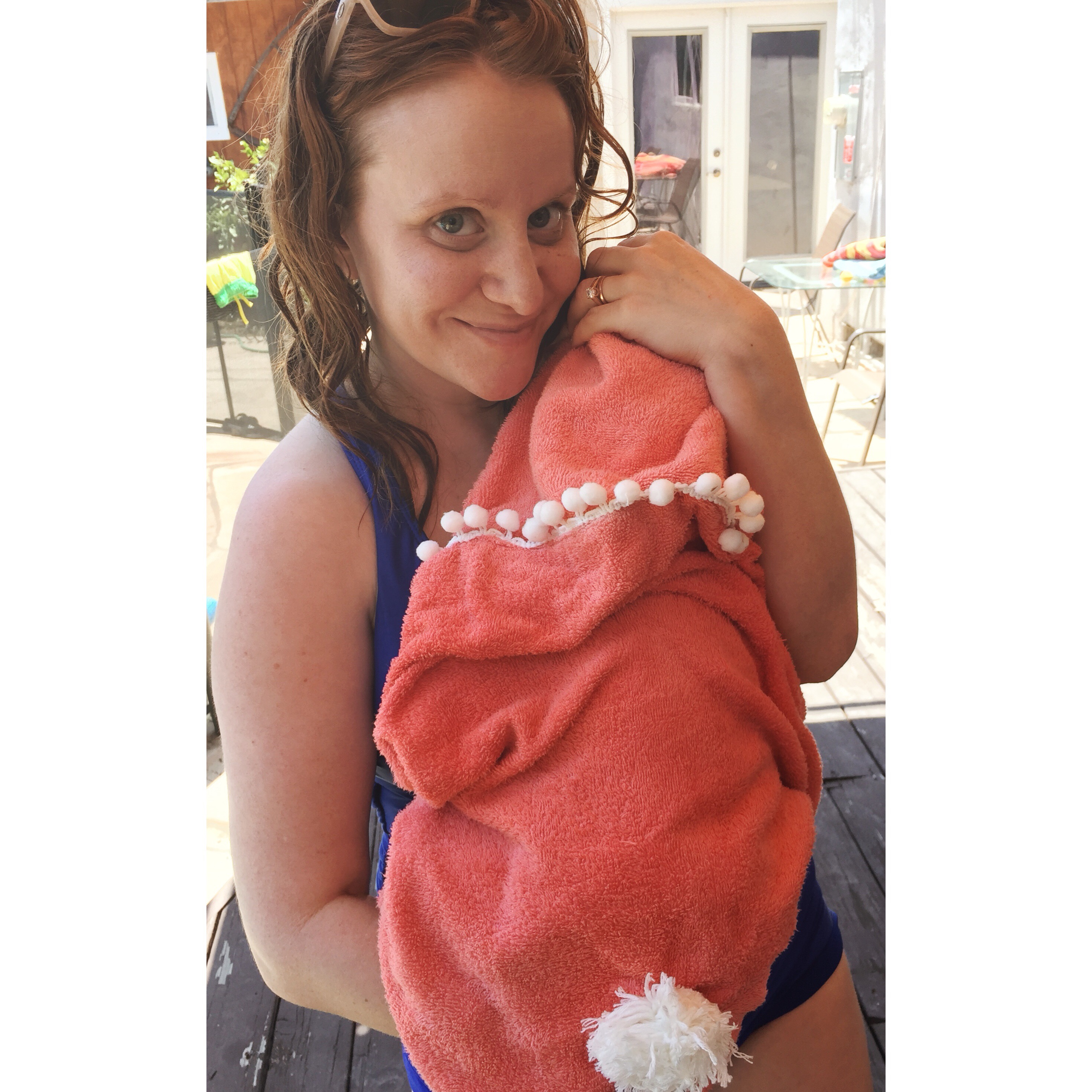
-
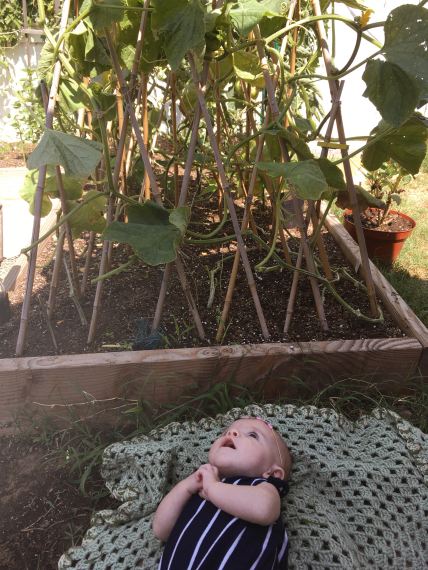 I had an extremely bad case of spd/pgp and was on 20 mg on oxycodone a day to stay out of the hospital. The 20 mg of oxycodone didn’t even get rid of the pain, it just allowed me to sleep for a few hours and make it to the toilet. Chronic pain was not something I was familiar with, and add to that that I was pregnant so I could not truly adequately treat it? Yikes. I kept telling my husband, “I’m going to need therapy after this.” I’ve relearned how to walk and swallow from brain surgery, and THIS was way worse. So when the baby was finally born I lost an adorable 7.5 pounds but I still couldn’t fit into my usual clothes. But something about my maternity clothes upset me.
They looked sad. They looked mean. They made me want to cry.
I had never had an emotional response to clothing before, but I began to understand that those dresses were my uniform for that particular span of time in which I was in a lot of pain and a lot of stress.
I took all of my maternity clothes and anything that I wore during that time and put it in a pile. When I’m feeling a bit beat up by the day, when things are just not working out for me, I take a piece out and make either a toy or a dress for my baby.
Transforming the icky into something lovely helps me move on from those old feelings and fears.
-
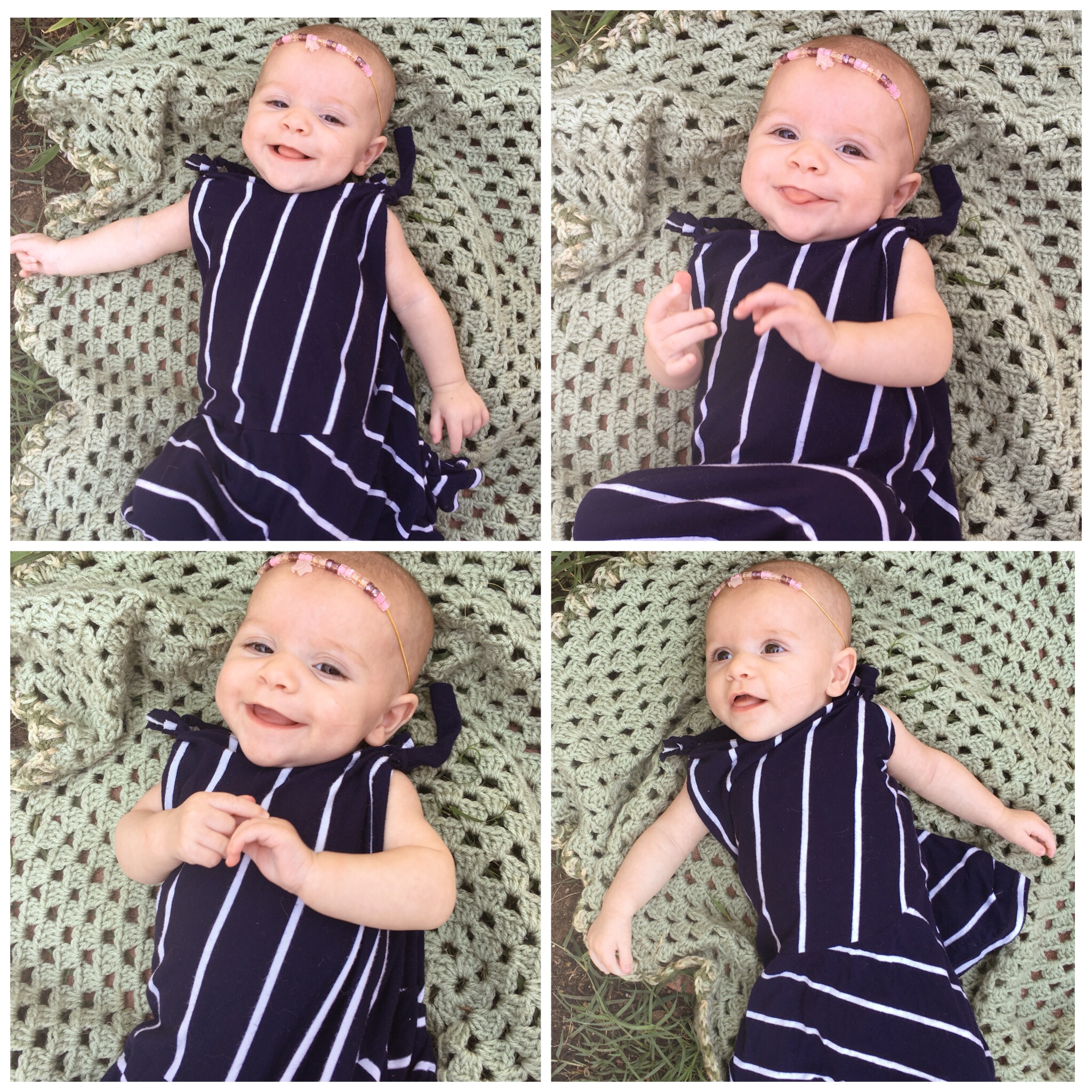
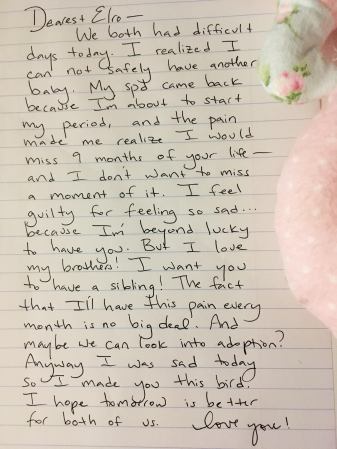
I have been writing letters to my daughter since my pregnancy. I recommend it because I would have loved to know what my mother’s thought process was during her journey. I write about the things I make for her and she’s starting to be old enough to enjoy them, which is an amazing feeling. The combination of the letters and the pictures of her with the things I make her will hopefully be able to capture my story for her so she can understand who I am, how I felt, and most importantly, how much I love her.
We had a tough day yesterday. She was having a fussy day, but I was digesting some information that was difficult to process. I took this picture while crying because I was interested in how we looked together. We look miserable! I explain it all in the letter…
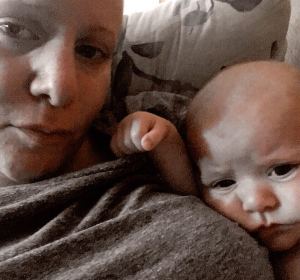
The next day was better! She felt better and she loved her new toy. And I love what her new toy represents — transforming sadness by creating beautiful things.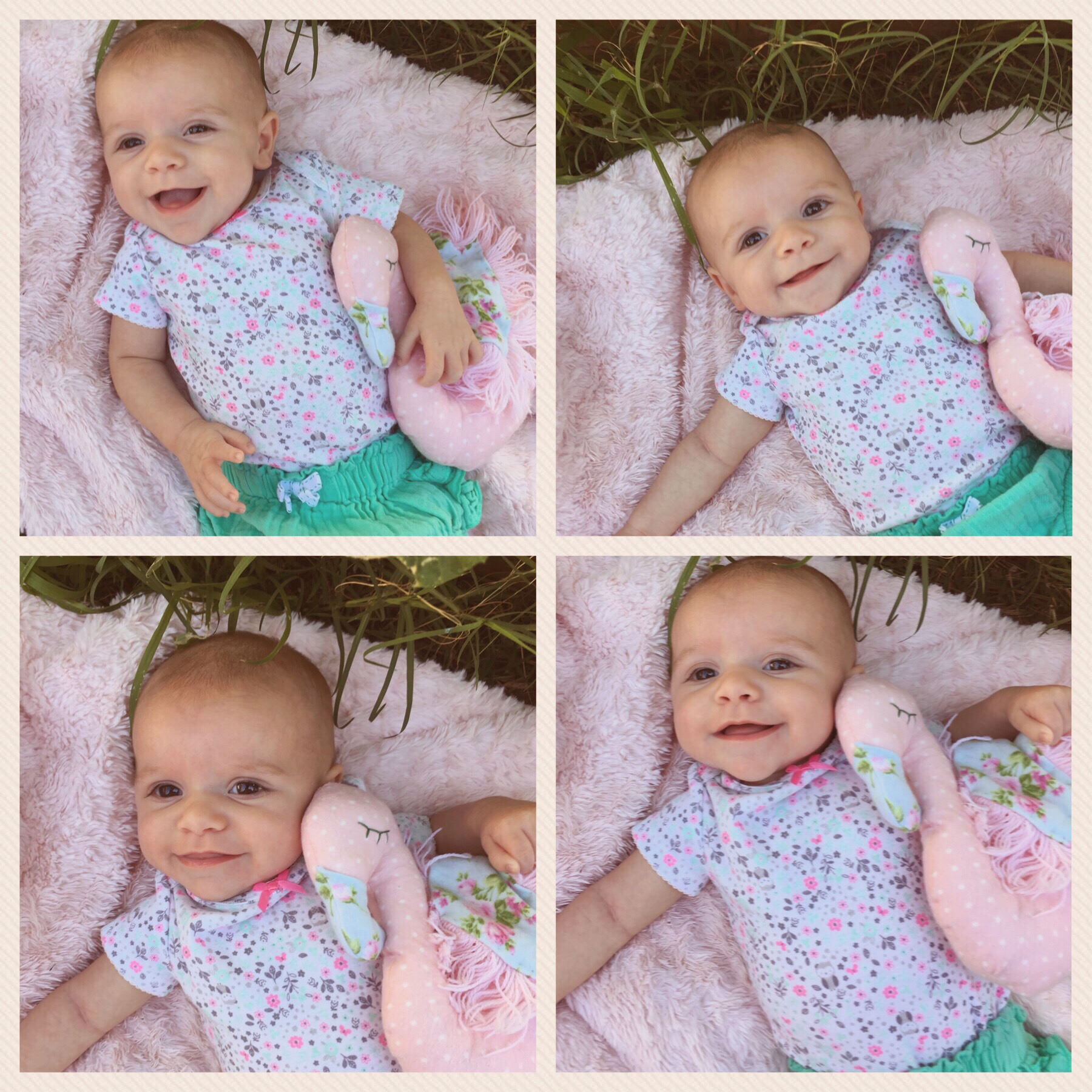
-
- Start as early as possible. It took me almost ten months to get off certain medications and I expected the whole withdrawal process to last two months.
- Choose doctors you trust. This is a delicate journey you’re on and there may be times you second-guess every decision you’ve ever made. Don’t let one of those decisions be who your provider should be.
- Have your doctors be in contact with each other. My psychiatrist had my OBGYN’s info and vice versa. If unexpected situations arise, sometimes they need to problem solve with or even for you.
- Have back up plans for your back up plans. For example, I knew that if getting off drug A got me in trouble I could take drug B. I knew that if drug B gave me nasty side effects then we could use drug C. If drug C didn’t work out, going back on drug A was a better solution. It was better to be on drug A than nothing.
- Consider location. Both OBGYN and labor and delivery were a 15 minute drive, which was great because I had to go there for emergencies (unrelated to bipolar disorder) multiple times. My psychiatrist is 45 minutes away. If he was unable to respond to phone calls immediately then this distance would have been a nightmare because I ended up being on bed rest for seven months.
- Figure out whom you’re going to tell about your pregnancy or preparing for your pregnancy. I was so scared and nervous I told everyone – but that made me vulnerable to comments like “your books can be your kids, you don’t need to be a mom” or “my friend went off her meds to get pregnant and ended up in a psych ward” or “could you even live with yourself if your child ends up being crazy, too?” However! Realize you might not have a choice on who knows. At a mother’s day party for my mom I was on the floor rocking back and forth on the floor from stomach pain from klonopin withdrawal. I’m pretty sure everyone knew something was up.
- Take care of your mind and body. Work with a therapist. Eat clean. Take vitamins. Exercise. Meditate. Take walks in nature. Read. These are things you can control! And that’s a beautiful thing.
- Keep a journal. Write down your worries but also write affirmative affirmations. Write on really good days as well as the really bad days. This will help you remember this is a journey.
- Don’t confide with groups or pregnancy apps with people having “typical” pregnancies. They are not thinking about the same things you’re thinking about. If I asked if anyone else was taking Prozac, maybe one or two people would say yes. Most of the comments were about how I shouldn’t be taking anything or that if I’m someone who has to take Prozac, I shouldn’t have children. Even though I was on top of the research and working with great doctors, it still pained me and made me second guess myself when I would get these comments.
- Don’t try to make the goal ZERO medication during pregnancy. Some medications are safe during pregnancy. I was weaned off three medications and stayed on two medications – and then added another medication in my second trimester. Every single one of these medications has been researched and I was on a therapeutic but low dose. My baby girl was totally fine. When the benefits outweigh the risks, trust your doctors.
 Rae Rose